Mangoes Last Longer with This Temperature Discovery!!
Mangoes Last Longer with This Temperature Discovery!!
𝐌𝐚𝐧𝐠𝐨𝐞𝐬 𝐋𝐚𝐬𝐭 𝐋𝐨𝐧𝐠𝐞𝐫 𝐰𝐢𝐭𝐡 𝐓𝐡𝐢𝐬 𝐓𝐞𝐦𝐩𝐞𝐫𝐚𝐭𝐮𝐫𝐞 𝐃𝐢𝐬𝐜𝐨𝐯𝐞𝐫𝐲!! Not many people know that mangoes continue to ripen even after being harvested. When exposed to high temperatures, the fruit changes color faster, softens more quickly, and gradually loses its natural flavor A New Study That Could Help Save Mangoes According to NDTV (India), improper storage can make […]
Not many people know that mangoes continue to ripen even after being harvested. When exposed to high temperatures, the fruit changes color faster, softens more quickly, and gradually loses its natural flavor
A New Study That Could Help Save Mangoes
According to NDTV (India), improper storage can make mangoes turn mushy, lose moisture, and decrease in nutritional value within just a few days. This process also causes vitamin C and antioxidants in mangoes to decline over time.
A new study published in Tropical Plants found that storage temperature plays a major role in maintaining mango freshness. Researchers discovered that 𝐚 𝐭𝐞𝐦𝐩𝐞𝐫𝐚𝐭𝐮𝐫𝐞 𝐨𝐟 𝐚𝐫𝐨𝐮𝐧𝐝 𝟏𝟐°𝐂 𝐡𝐞𝐥𝐩𝐬 𝐬𝐥𝐨𝐰 𝐝𝐨𝐰𝐧 𝐭𝐡𝐞 𝐫𝐢𝐩𝐞𝐧𝐢𝐧𝐠 𝐩𝐫𝐨𝐜𝐞𝐬𝐬, keeping mangoes firmer and reducing spoilage. Mangoes stored in a cool environment retain their moisture and texture much better, while those kept at higher temperatures of around 26–30°C lose water quickly, wrinkle easily, and experience a rapid drop in quality within a short period of time. The study also pointed out that temperatures that are too low may cause dark spots inside the flesh, reduce flavor quality, and affect the fruit’s nutritional value.
💡✅ 𝐒𝐭𝐨𝐫𝐚𝐠𝐞 𝐓𝐢𝐩: Unripe mangoes should be kept at room temperature so they can ripen naturally. Once the mangoes are ripe, they should be moved to the refrigerator to extend freshness and shelf life.
Sometimes, just one small change in storage conditions can significantly reduce post-harvest spoilage.
📊🥭Hot Summer, Higher Mango Demand? Markets Are Expecting It!
Experts predict that this year’s summer will be hotter than in previous years due to a combination of factors, including the early formation of El Niño conditions, the expansion of western heat low pressure systems, the “heat dome” effect, and the ongoing trend of global warming. As a result, a rapid increase in demand for refreshing tropical fruits is becoming increasingly expected across many markets.
The tropical fruit market is projected to experience strong growth over the next few years. This market is expected to reach $6.67 billion by 2030 with a compound annual growth rate (CAGR) of 6.1%. This growth during the forecast period is likely driven by increasing demand for exotic fruits; growing adoption of organic farming practices by growers; and consumers shifting their tastes toward more natural foods and healthy beverages.
According to The Business Research Company (TBRC), many popular tropical fruits such as mangoes, dragon fruit, papayas, pineapples, bananas, guavas, and other varieties are becoming increasingly favored in international markets thanks to their refreshing taste and high nutritional value with mangoes leading the list as one of the most preferred tropical fruits.
From Khanh Hoa Province The Home of Vietnamese Elephant Mangoes
According to Vietnam’s agricultural export reports and market data published by VnExpress, mangoes are considered one of Vietnam’s key agricultural export products. Vietnamese mangoes are currently exported in fresh, frozen, and processed forms to more than 50 countries worldwide, with major varieties including Cat Hoa Loc mangoes, Keo mangoes, and Cat Chu mangoes.
Among these varieties, Elephant Mangoes (also known locally as “Xoài Tượng,” commonly associated with Green Elephant Mangoes or Taiwanese mango varieties) are particularly recognized for their large size, typically weighing from 700 grams to over 1,000 grams per fruit, along with their thick skin, crispy flesh, and low fiber content. Thanks to continuous improvements in cultivation practices, packaging standards, and post-harvest management, Vietnamese mangoes have successfully entered demanding export markets such as the United States and Australia.
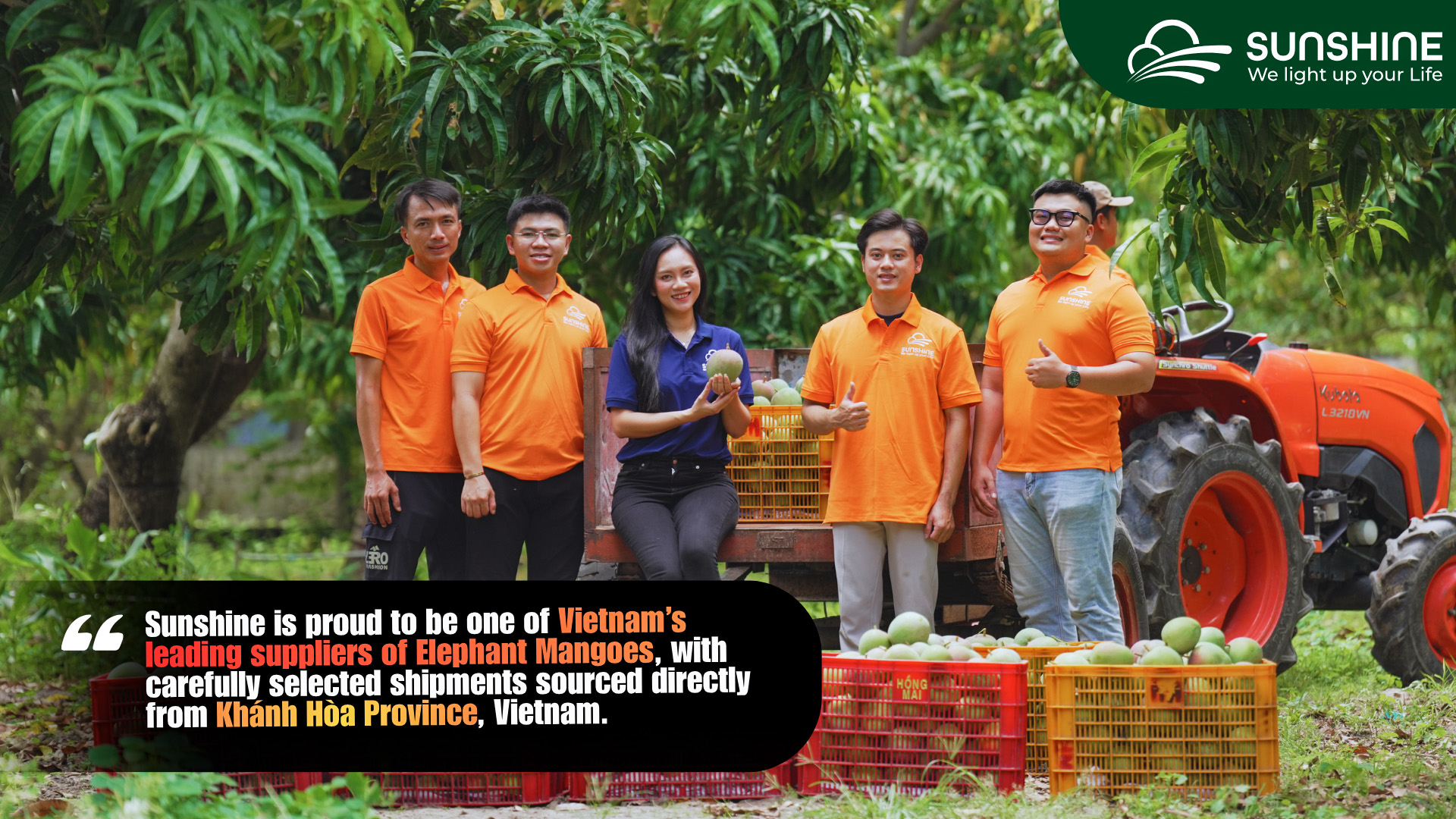
Currently, Sunshine is proud to be one of Vietnam’s leading suppliers of Vietnamese Elephant Mangoes, with carefully selected shipments sourced directly from Khánh Hòa Province, Vietnam.
A Seasonal Buying Tip for Mango Buyers (Updated Late May 2026)
At Sunshine, we focus on quality over quantity. With our passion for Vietnamese agriculture and our commitment to reliable, professional partnerships, we believe market insights should also be shared openly with our partners.
As of late May 2026, Pink Elephant mangoes are gradually moving past their main harvest season, which typically runs from April to July. Meanwhile, Yellow Elephant mangoes are now entering one of their strongest periods of the year, with a longer main season from April to September and peak quality usually falling between April and June. Green Elephant mangoes, also commonly known in Vietnam as “Xoài Tượng Xanh,” are also entering peak harvest season from April to July, with stronger availability expected in the coming months.
With this year’s intense summer heat and El Niño conditions continuing to affect many markets, demand for refreshing tropical fruits is expected to remain strong. For partners planning mango supply programs for the upcoming season, Yellow Elephant and Green Elephant mangoes are currently the most suitable choices thanks to their stronger seasonal availability and export quality.
From fresh mangoes to supermarket shelves, Sunshine is committed to delivering carefully selected Vietnamese mangoes with consistency and reliability in every shipment.
For more information, connect with us to explore a long-term partnership with a world-class Vietnamese mango supplier.